HSBC Revolution Earns 8 mpd From April: What It Means for HSBC Customers
It is no secret that the HSBC Revolution Credit Card had a rather bruising 2024. Travel bonuses were axed. Contactless bonuses followed. Even its complimentary travel insurance disappeared. For a no-annual-fee card that had once been a mainstay in many Singaporeans' wallets, the cuts stung. What followed was a series of temporary restorations under the Revo Up promotion banner, first from July 2025, then extended, twice, through to the end of March 2026. Every extension came with the same lingering question: would HSBC ever commit to making these improvements permanent? From 1 April 2026, we finally have a definitive answer. And for those of us who hold HSBC accounts with at least S$50,000 parked in the Everyday Global Account (EGA), the answer is considerably more generous than many expected.
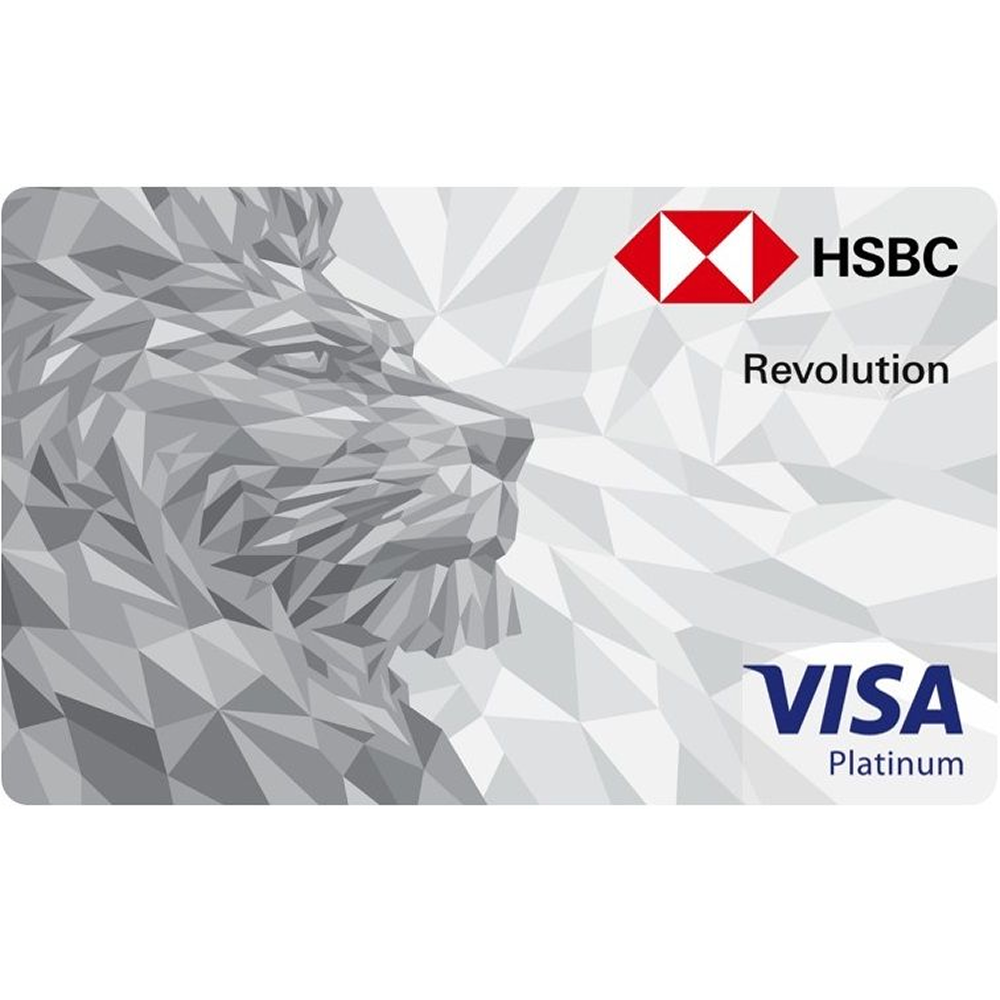
Photo Credit: HSBC
HSBC is restructuring the Revolution's reward tiers into two distinct tracks: a standard tier for all cardholders, and an enhanced tier for those who maintain a minimum average daily balance (ADB) of S$50,000 in a sole HSBC Everyday Global Account (SGD-denominated). All Revolution cardholders will permanently earn at a 4 mpd rate on eligible bonus category spend, whether made online or via contactless payment. The categories covered are dining, shopping, travel (airlines, hotels, car rentals, cruises), transport (taxis and ride-hailing), and membership clubs.
The monthly bonus cap for standard cardholders will settle at S$1,000 - a step down from the S$1,500 promotional cap currently in place, but still meaningful for everyday spend. Here is where it becomes genuinely interesting for enhanced customers. Maintain at least S$50,000 in average daily balance in a qualifying sole HSBC EGA SGD account for any given calendar month, and your earn rate doubles to 8 mpd on the same bonus categories with a monthly cap of S$1,200 (instead of S$1,000).
| Standard Cardholders | Enhanced Cardholders (S$50K ADB in EGA) | |
|---|---|---|
| Bonus Earn Rate | 10x points (4 mpd) | 20x points (8 mpd) |
| Monthly Bonus Cap | S$1,000 (9,000 points) | S$1,200 (22,800 points) |
| Base Earn Rate | 1x points (0.4 mpd) | 1x points (0.4 mpd) |
| Annual Max Bonus (at best ratio) | 43,200 miles | 109,440 miles |
One important nuance: your tier status is calculated on a calendar-month basis. If your EGA SGD balance clears the S$50,000 ADB threshold in a given month, you earn at the enhanced rate for all bonus category spend posted that month. Fall below the threshold in any month, and you revert to the standard tier for that period.
I have made no secret of the fact that I hold an HSBC Premier account (mostly to access that fantastic HSBC Premier Mastercard) and the Premier relationship requires a minimum of S$200,000 in total relationship balance. For most Premier customers, keeping at least S$50,000 in the EGA SGD account at any given time is not a stretch at all - many of us have significantly more than that parked there as working capital or short-term liquidity. In other words, for a meaningful segment of Premier customers, the 8 mpd tier is not an additional hurdle. It is simply the rate they will now earn, as a natural consequence of how their finances are already structured.
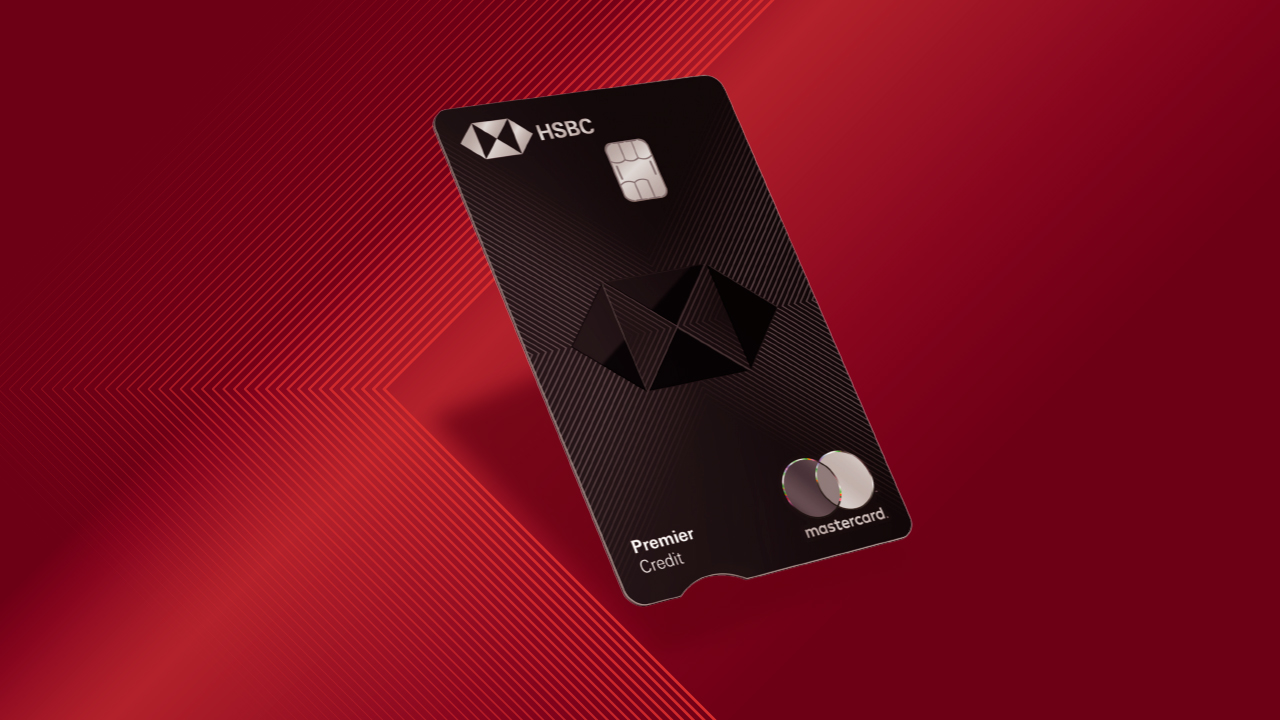
Photo Credit: HSBC
The elephant in the room, of course, is the opportunity cost of keeping that S$50,000 in the EGA versus deploying it into T-bills, Singapore Savings Bonds, or a higher-yield savings account. The EGA's base interest rate of 0.05% p.a. is negligible, and while HSBC does run periodic bonus interest promotions on incremental ADB, you will want to run your own numbers depending on what your alternatives look like. For Premier customers who are already using the EGA as a transactional or liquidity account, however, the calculus is quite different. You are not sacrificing yield to chase miles; the miles are simply a by-product of funds you would have kept there regardless.

The eligible categories remain consistent with the previous promotion. Qualifying spend must be made online or via contactless payment, and fall under the following broad buckets:
Dining: restaurants, bars, cafes and caterers (MCC 5441, 5462, 5811, 5812, 5813)
Shopping: department stores, electronics, clothing, pharmacies, bookstores and a broad range of retail MCCs
Travel: airlines, car rental agencies, hotels and resorts, cruise lines (MCC 3000–3999, 4411, 7011)
Transport: taxis and ride-hailing platforms (MCC 4121)
Membership clubs: country clubs, sports and recreational clubs (MCC 7997)
A few exclusions worth noting. Online travel agencies carrying MCC 4722 (including Agoda, Expedia, Hotels.com, Klook and Pelago) do not qualify for the bonus, so booking direct with airlines and hotel chains is the correct approach here. Fast food establishments coded under MCC 5814 are also excluded, which occasionally catches people out since food delivery platforms and some restaurants with unexpected MCC classifications can fall into this bucket.

One pleasing nuance: hotel restaurants at larger properties will typically process transactions under a hotel MCC (3501–3999 or 7011) rather than a dining MCC, which means a dinner at a hotel restaurant often earns the travel category bonus rate. For those who frequent hotel dining as part of a broader hospitality lifestyle, this is a quiet but useful benefit.
The advertised 4 mpd and 8 mpd rates presuppose a transfer partner offering a 2.5:1 ratio (25,000 HSBC points for every 10,000 miles). Not all partners are equal, and the effective earn rate varies accordingly.
| Transfer Ratio | Standard (4 mpd tier) | Enhanced (8 mpd tier) | Example Partners |
|---|---|---|---|
| 25,000 : 10,000 | 4.00 mpd | 8.00 mpd | British Airways Avios, Asia Miles, Qantas, EVA Air, Flying Blue |
| 30,000 : 10,000 | 3.33 mpd | 6.66 mpd | KrisFlyer |
| 35,000 : 10,000 | 2.86 mpd | 5.71 mpd | Aeroplan, United MileagePlus |
| 50,000 : 10,000 | 2.00 mpd | 4.00 mpd | JAL Mileage Bank |
KrisFlyer, by virtue of the 30,000:10,000 transfer ratio, yields 6.66 mpd for enhanced cardholders rather than the headline 8 mpd. That is still a strong return on a card with no annual fee, though it does underscore why maximising the HSBC Revolution Credit Card’s value means thinking carefully about your transfer destination. Asia Miles and British Airways Avios both sit at the best 2.5:1 ratio and offer compelling redemption options for aspirational travel out of Singapore. Conversions are processed instantly through the HSBC Singapore app, are free of charge, and can be done in increments of just two miles after the initial 10,000 mile minimum. Points are also pooled across all HSBC credit cards you hold, which is a practical convenience if you are stacking multiple HSBC products.

In a turn of events that feels faintly circular, the complimentary travel insurance that was removed in April 2025 is being reinstated from 1 April 2026. Coverage applies when air tickets are purchased with the card, or when award tickets are redeemed using miles and the taxes and surcharges are charged to the card. It is basic coverage, and I would not rely on it as your sole protection for an overseas trip, particularly where overseas medical expenses and personal liability are concerned.
The HSBC Revolution Credit Card will also move from a Visa Platinum to a Visa Signature designation from 1 April 2026. The upgrade is automatic for existing cardholders; there is no need to request a card replacement, as the card number will be recognised under the Visa Signature range from April onwards. In practical terms, this adds access to the Visa Signature Luxury Hotel Collection as well as a fast-track pathway to Avis President's Circle status. If you already carry a Visa Signature product in your wallet (the DBS Altitude Visa and UOB Visa Signature being two common examples), the incremental benefit here is modest. But for a no-annual-fee card, it is a welcome addition.
For Premier customers with the funds already sitting in the EGA, the answer is straightforward: the enhanced tier is essentially a free upgrade to your existing earn rate on this card. The miles you accumulate over twelve months at the enhanced cap - up to 109,440 miles at the best ratio - represent meaningful redemption potential for aspirational long-haul travel.

For those who would need to move funds specifically to meet the S$50,000 ADB requirement, the calculation is a different beast. The EGA's base interest rate of 0.05% p.a. is negligible, and the periodic bonus interest promotions, while helpful, vary from month to month and are not guaranteed in perpetuity. Whether parking capital there makes financial sense depends on what yield you are currently achieving on those funds elsewhere, and how you personally value the incremental miles earned.
What I will say is this: if you are already an HSBC Premier customer, it is worth reviewing where your EGA balance typically sits across the calendar year. In months where you are comfortably above the S$50,000 ADB threshold, you are now earning at 8 mpd on up to S$1,200 of bonus spend. Leaving that on the table, when the funds are there, is leaving miles on the table.
The HSBC Revolution Credit Card's April 2026 changes represent the most substantive positive upgrade the card has seen in some time. For HSBC customers already holding S$50,000 or more in their EGA SGD account, the 8 mpd earn rate on an annual-fee-free card is a genuinely compelling proposition. At the best transfer ratios, the annual bonus cap delivers over 100,000 miles - enough to make a serious dent in a business class redemption to Europe or North America.



I swapped my usual Andaz Xintiandi, Shanghai for the Hyatt Centric Zhongshan Park and used a Suite Upgrade Award on the 83 sqm Premier Suite. Here is how the room, the breakfast and the missing club lounge stacked up.